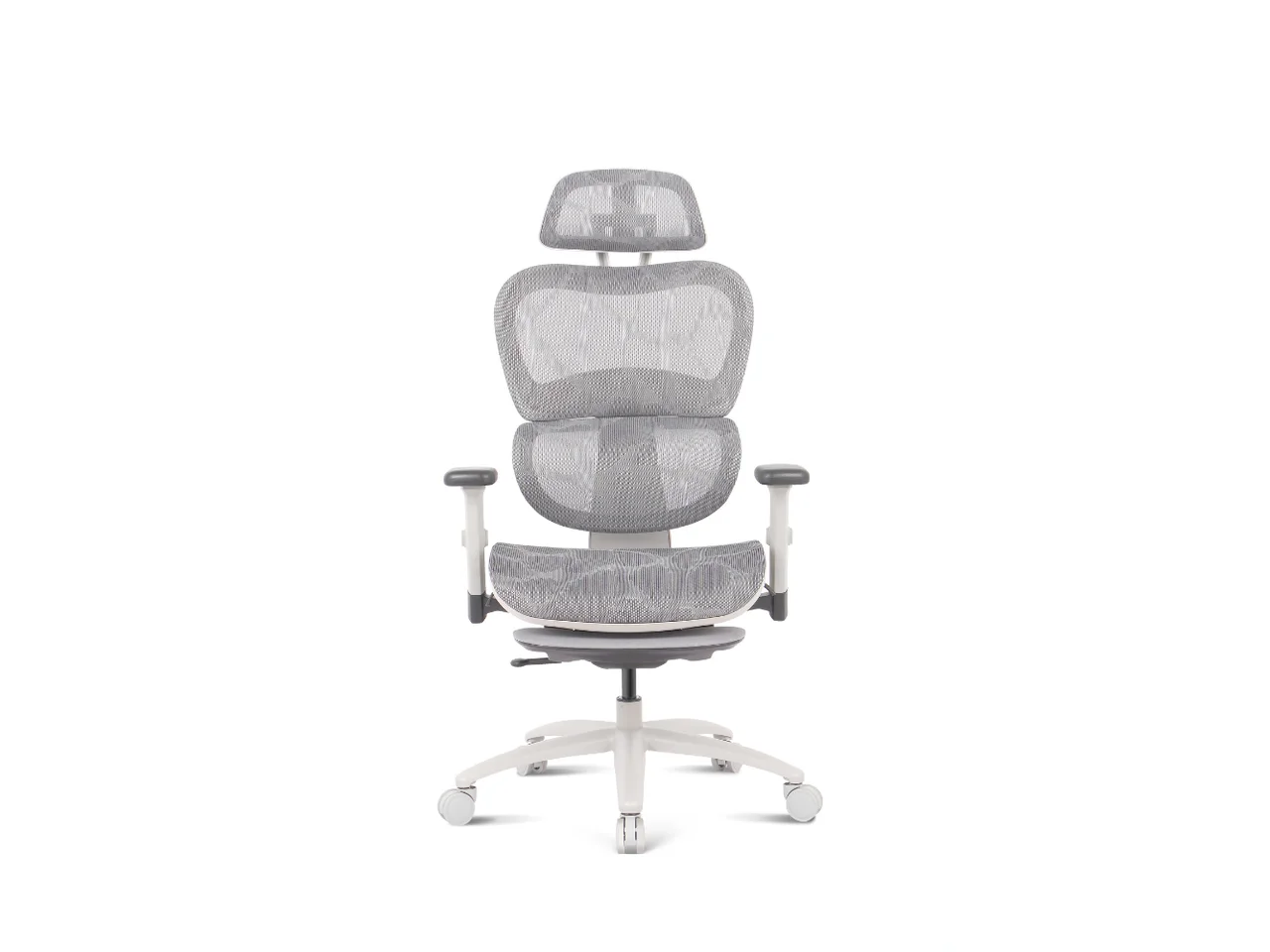
The five-star base is the part of a chair that cracks, and it is the part most buyers spec last — usually after they have spent their attention on fabric color. That is backwards. The base, the gas lift and the tilt mechanism are what pass or fail a stability and strength test, and the base is where a cheap chair quietly gets cheaper.
Nylon: fine, within limits
Most office chairs ship on a nylon base, and for good reason — it is light, it does not corrode, and a properly made glass-fibre-reinforced nylon base passes structural testing without trouble. The catch is in that word "properly." A nylon base with too little glass fibre, or moulded thin to save resin, is the one that splits at a spoke after a heavy user drops into it. You cannot see the difference across a showroom; you see it in a warranty photo a year later. For home-office and light-commercial chairs, good nylon is the right call and we use it without apology.
Aluminum: when it earns its cost
An aluminum base — polished or painted die-cast — is stronger, takes more abuse, and looks the part on an executive or premium chair. It also costs more, and it is heavier, which nudges your container weight (though with chairs you cube out before you weigh out, so this rarely bites). For a 24/7 chair, a big-and-tall program, or an executive line where the base is on show, aluminum is what we recommend, and we pair it with a Class 4 gas lift rather than mixing a strong base with a weak cylinder.
The trade-off in one paragraph
Here is the line we give buyers, almost verbatim. The cheapest base we offer is nylon — genuinely fine for home use, and we are not going to upsell you on a chair that sits in a spare room. But for a contract chair that gets sat in all day by whoever walks up, we push you to aluminum. It costs more per unit; it also stops the warranty claims that cost far more than the upgrade ever did. Spend the money where the chair breaks, not where the customer looks.
The matching principle is the point: do not put an aluminum base under a Class 3 cylinder, and do not waste an aluminum base on a chair with a flimsy tilt. The parts should be specced as a set for the duty level, which is exactly how we quote our office-chair platforms — and how the ODM/OEM team configures a private-label run.
Tell us the duty level and the markets, and we will recommend a base, cylinder and mechanism set rather than letting you mix mismatched parts. We build to BIFMA/EN methods and testing can be arranged per order. Reach the desk at our contact form or [email protected].