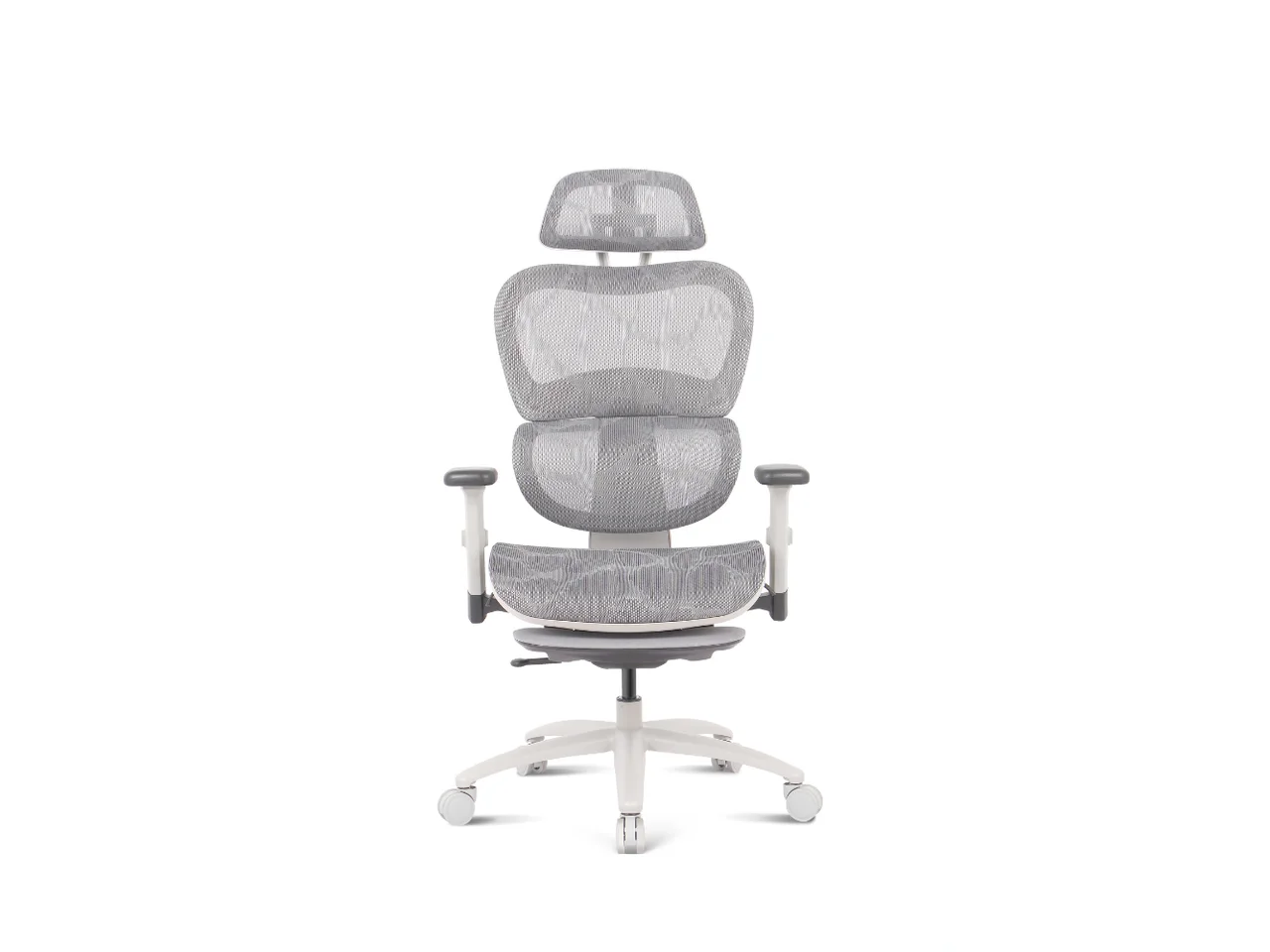
Almost every buyer who writes to us asks the same thing in different words: "Can this chair be tested for my market?" The honest answer is that a chair is tested to a named standard, with a named load, for a named market. For office seating the two that matter are ANSI/BIFMA X5.1 in North America and EN 1335 in Europe. They are not interchangeable, and picking the wrong one wastes both your money and ours.
What each standard is really checking
BIFMA X5.1 (the current edition is X5.1-2017, reaffirmed in 2022) is a general-purpose office-chair test. It runs the chair through structural and cyclic abuse: seating-impact drops, backrest cycling, swivel cycling, arm strength, caster durability and stability. When a sourcing guide tells you to "ask for the X5.1 cycle results," it usually means the back and seat cycle counts — commonly in the range of 120,000 actions for a commercial chair. That number is a proxy for years of daily use.
EN 1335 is the European office-chair standard and it splits into three parts: 1335-1 covers dimensions, 1335-2 covers safety requirements and test methods, and 1335-3 covers the test detail. The part most buyers feel is 1335-1, which sorts chairs into dimensional types A, B and C by seat height and depth ranges. A German contract tender will often specify "type A," and a chair that passes every strength test but sits 10 mm outside the type-A seat-height band still gets rejected.
Where they actually diverge
The cycling philosophies overlap, so a well-built chair tends to survive both. The real divergence is two-fold. First, EN 1335 tends to push harder on side-to-side stability and on those dimensional bands — Europe cares whether the chair fits a regulated workstation, not just whether it survives. Second, the heavy-duty story differs: in the US, intensive-use and big-and-tall seating is often referenced against a higher test load, and a 24/7 control-room chair is a different SKU from a general task chair.
Here is the trade-off we put in front of buyers. Building one chair to clear both X5.1 and EN 1335 is possible, but it means tooling the base, gas lift and frame to the stricter of the two on every parameter — and you pay for that in unit cost even in the market that did not need it. If you only sell into the EU, building to US heavy-duty loads is money spent on a number your customer never reads. We would rather match the spec to the destination.
How we handle it on an order
We build our ergonomic office chairs to BIFMA and EN test methods, and testing to either standard can be arranged through a third-party lab per order — we do not pre-print a certificate that may not match your final configuration. What we will not do is turn that into a blanket BIFMA claim when the honest sentence is "built to the same construction we have passed before." Those are different sentences, and the second one is the true one until your sample is in the lab.
Two practical asks before you place an order. Tell us the destination market so we set the right dimensional type and load class from the first sample, not the third. And if your buyer requires a report, decide early whether you want it on the production unit or on a representative sample, because that changes the timeline. Our ODM/OEM workflow bakes the test booking into the sample stage so nothing surprises you at shipment.
If you are weighing a chair program for more than one region, send us the markets and target quantities and we will map the standards and the cost deltas for you. Reach the export desk through our contact form or write to [email protected].